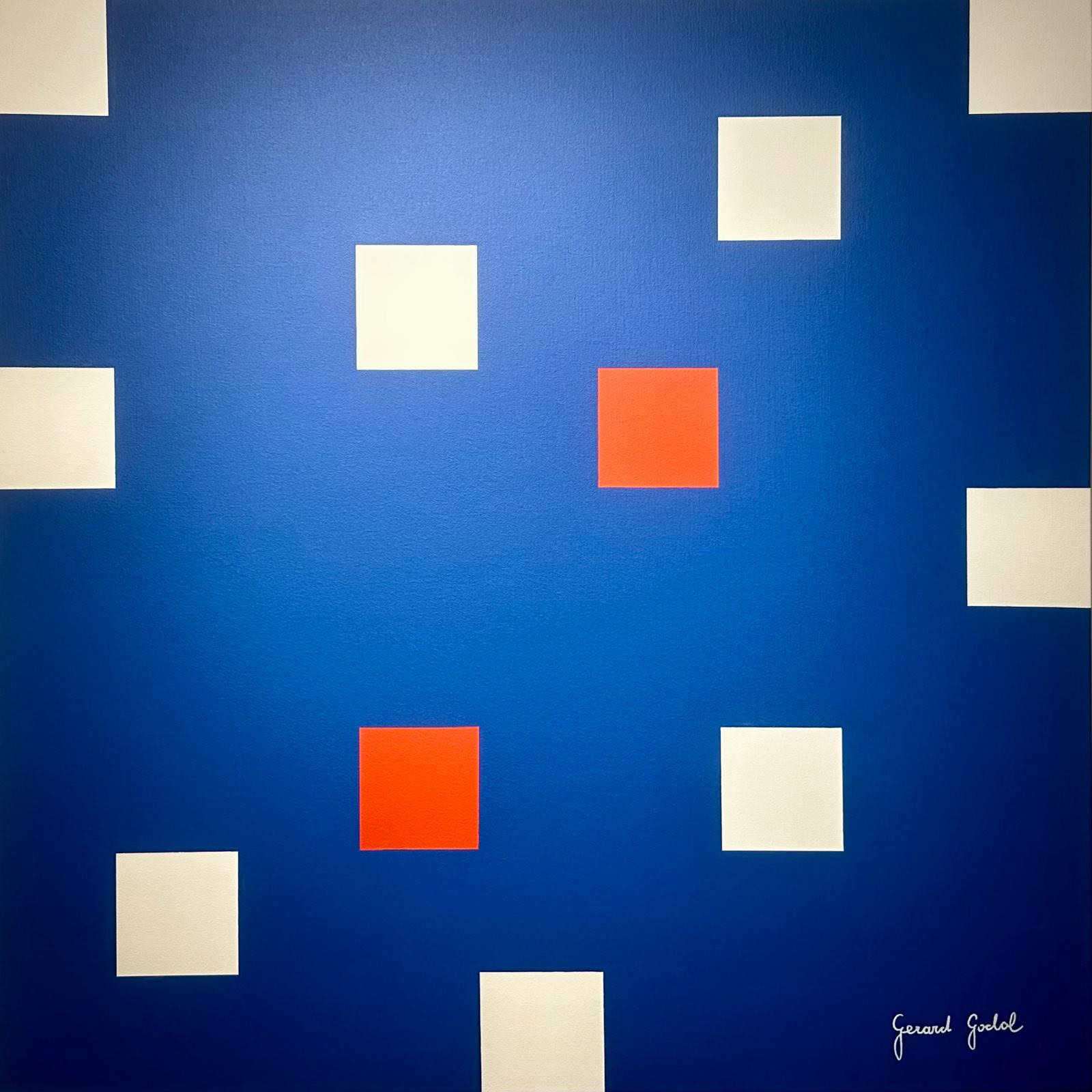
Searching for a new universal symbol I
Acrylic on Canvas
90 x 90 cm
Gerard Godal
Displayed by RELIFE.WORLD
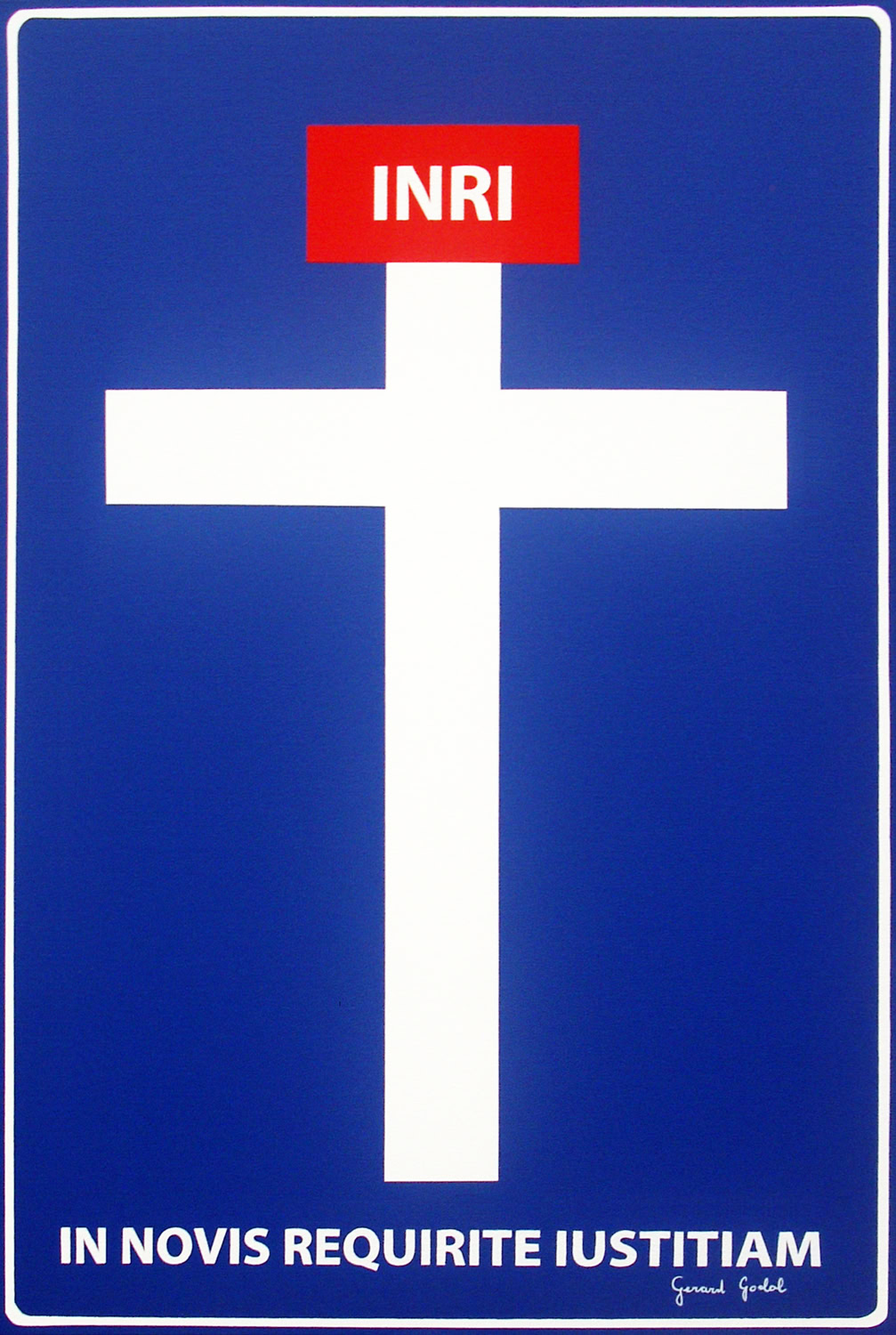
Dead End
Acrylic on Canvas
120 x 80 cm
Gerard Godal
Displayed by RELIFE.WORLD

Searching for a new universal symbol II
Acrylic on Canvas
90 x 90 cm
Gerard Godal
Displayed by RELIFE.WORLD

Signum Iustitiae (Teken van Rechtvaardigheid)
Gold Signature on Black Dibond
85 x 160 cm
Gerard Godal
Displayed by RELIFE.WORLD
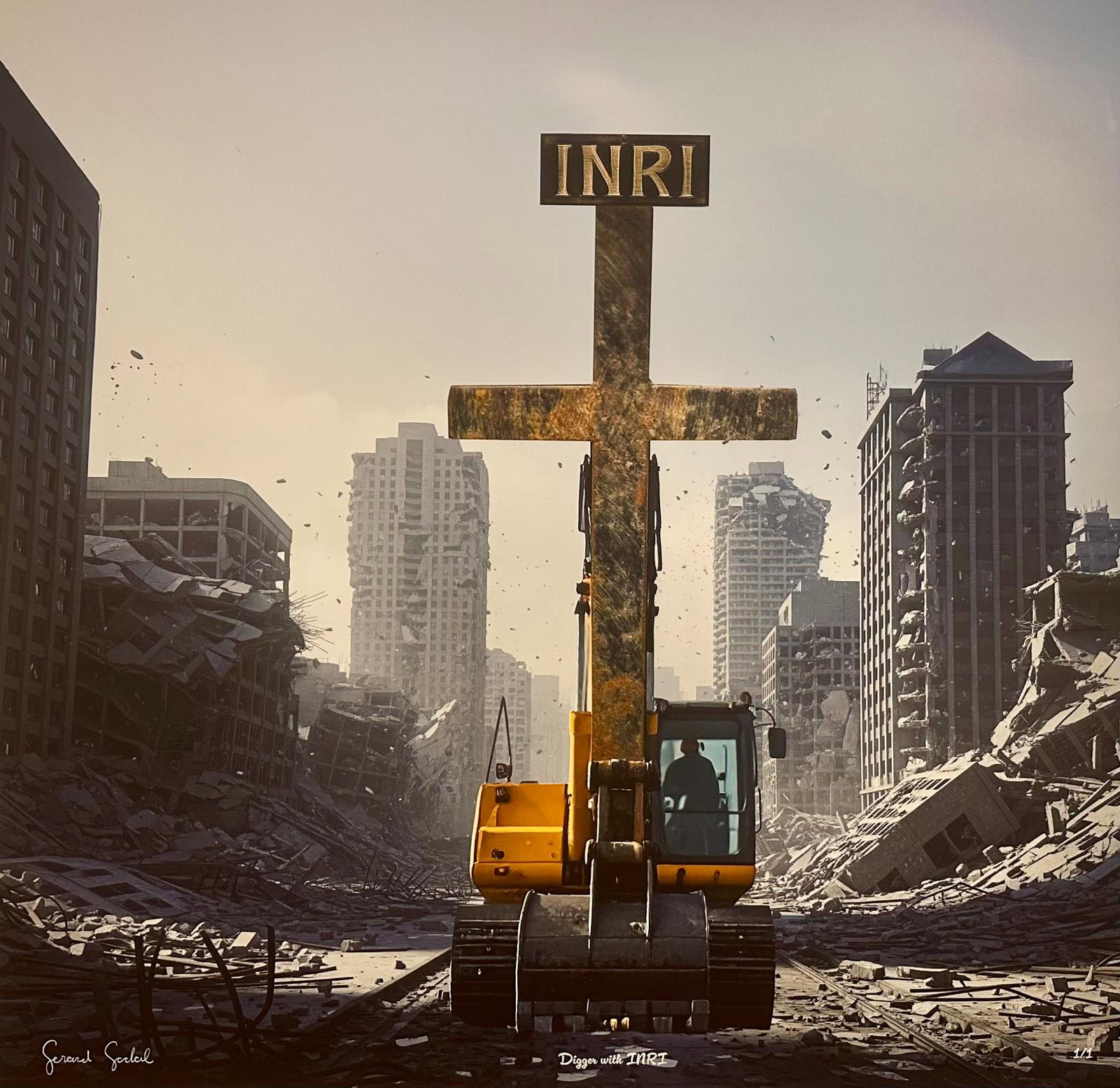
Digger with INRI
Print on Dibond
100 x 100 cm
Gerard Godal
Displayed by RELIFE.WORLD

Lunar Landscape
Print on Dibond
120 x 180 cm
Gerard Godal
Displayed by RELIFE.WORLD
About
Gerard Godal – INRI: The Search for Justice
Gerard Godal approaches symbols as living structures. They may carry centuries of meaning, authority, belief, and collective memory, yet in his work they are never fixed. He opens them, questions them, and redirects them towards the present.
At the heart of his recent work stands INRI, the inscription traditionally placed above the crucified Christ: Iesus Nazarenus Rex Iudaeorum, Jesus of Nazareth, King of the Jews. Godal preserves the historical weight of these four letters, but gives them a new reading:
In Novis Requirite Iustitiam — Seek Justice in the New.
Through this transformation, a familiar religious acronym becomes a contemporary appeal. The work no longer refers only to faith or sacrifice, but to the constant human need to reconsider justice, responsibility, and leadership. What does justice mean in a changing world? Who defines it? And how easily can symbols of authority become instruments of belief, persuasion, or power?
In Signum Iustitiae, Godal connects INRI with the golden signature of Donald Trump. Against a deep black background, the signature appears monumental, seductive, and almost sacred. The image brings worldly power and spiritual symbolism into direct contact. It is precisely within this unstable encounter that the work finds its tension.
The composition can be read as a warning, an accusation, an invocation, or even an apparent tribute. Godal refuses to determine which interpretation is correct. Instead, he allows admiration and discomfort, faith and scepticism, power and morality to exist within the same image.
Gold plays a significant role. Traditionally associated with divinity, wealth, triumph, and eternity, it gives the signature the aura of an icon. Yet against the black surface, that splendour becomes ambiguous. Is this the glow of leadership, the seduction of power, or the reflection of a society searching for new certainty?
Godal’s work does not offer political instruction. It creates a space in which the viewer must confront the mechanisms through which leaders, symbols, and narratives acquire authority. The question is therefore not simply whether the work glorifies or criticises a particular figure. The deeper question is what we ourselves project onto the image.
This ambiguity lies at the core of Godal’s practice. He uses recognisable signs not to confirm their accepted meaning, but to expose their instability. Like the strongest conceptual art, the work begins with something immediately visible and gradually opens into a moral and philosophical dilemma.
There is, perhaps, a distant echo of Jan Hoet’s belief that art should not remain polite or safely contained. Art must enter society, disturb its certainties, and create friction. Godal embraces that friction. His work does not seek consensus, but attention, reflection, and debate.
For him, INRI is no longer only an inscription from the past. It becomes a question addressed to the present:
Where, within the new world we are creating, will we search for justice?